 The DGX AI Access Brief
June 13, 2026
AI Readiness Starts in the Classroom.
From The AI Access Brief archive · originally published 2026-06-13
The Future Belongs to the Countries That Teach People How to Think With AI.
For the past two years, one question has dominated the conversation around education:
Should students use artificial intelligence?
It’s the wrong question. Students are already using AI.
They use it to brainstorm ideas, explain difficult concepts, practice languages, write code, summarize research, and prepare for exams.
The technology is already in their pockets and on their laptops.
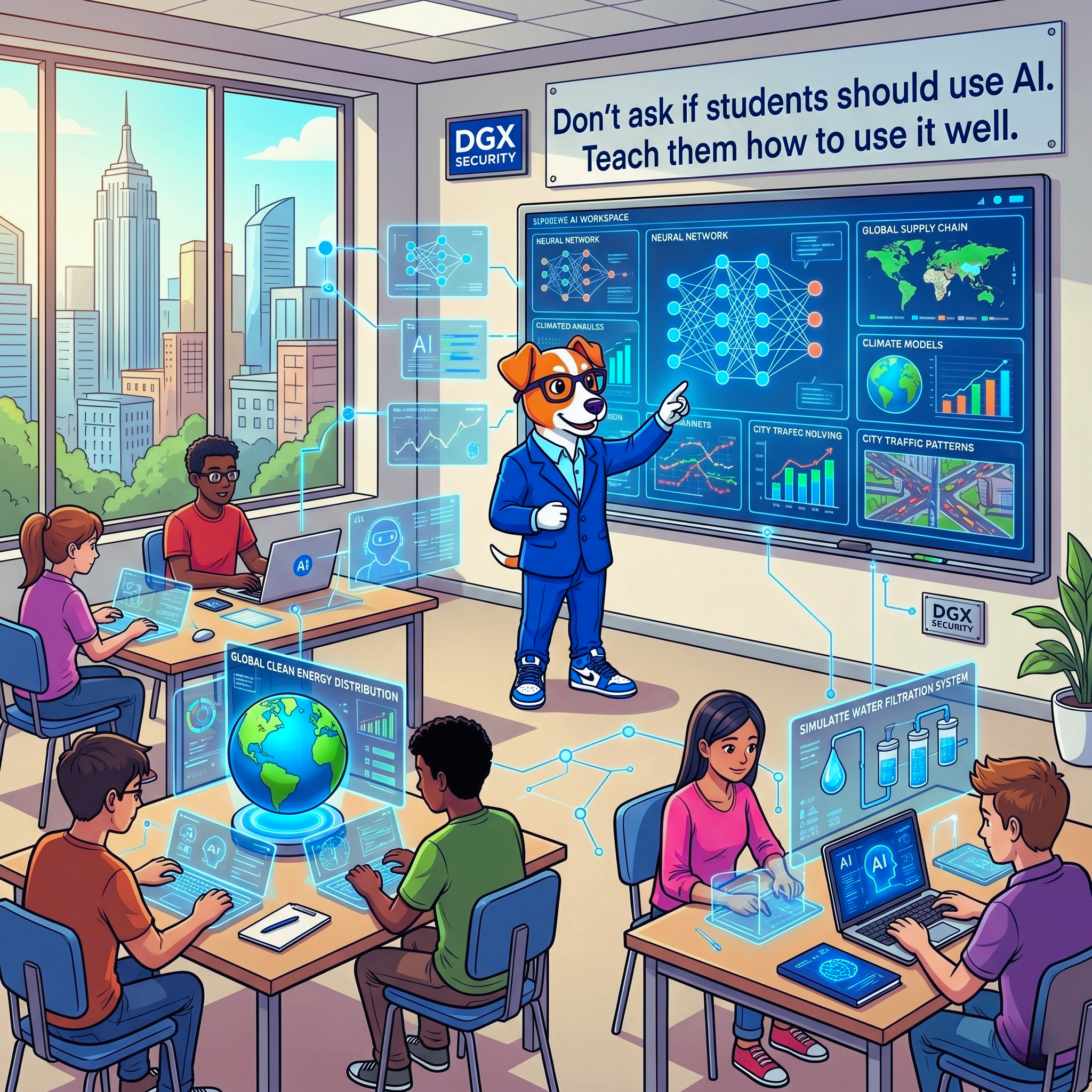
The real question is: How do we teach people to use AI well?
Estonia appears to understand this better than most.
Instead of trying to keep AI out of the classroom, the country is embracing it as part of modern education. Rather than banning the calculator, they’re redesigning the math class.
That shift in thinking may prove to be one of the most important educational decisions of this decade.
AI Is Becoming a Basic Skill.
For generations, literacy meant reading and writing.
Then it expanded to include digital literacy, the ability to navigate computers and the internet.
Today, another layer is emerging.
The ability to work effectively with artificial intelligence is quickly becoming a foundational skill for employment, entrepreneurship, and lifelong learning.
Future workers won’t be asked whether they know about AI.
They’ll be expected to use it.
The employees who know how to ask better questions, evaluate AI-generated information, automate repetitive tasks, and collaborate with intelligent systems will have a measurable advantage over those who don’t.
The Debate Is Already Over.
Many schools and organizations continue debating whether AI should be allowed.
But reality has already moved ahead. People aren’t waiting for permission.
Students are using it. Employees are using it.
Small businesses are using it. Governments are using it.
The challenge is no longer stopping adoption.
The challenge is ensuring that adoption happens responsibly, ethically, and effectively.
Teaching critical thinking alongside AI may become more valuable than teaching students to avoid AI altogether.
AI Literacy Without Access Is Incomplete.
At DGX Security, we believe there is another piece missing from the conversation.
AI literacy without AI access is like teaching someone to drive without giving them a car.
A lesson about prompting means little if a student has no AI-capable device.
An AI curriculum falls short if a family lacks reliable internet access.
A workforce program cannot prepare participants for tomorrow’s jobs if they never have the opportunity to practice with the tools employers already expect them to use.
Readiness requires more than knowledge. It requires opportunity.
From AI Literacy to AI Readiness.
This is why we believe the conversation should evolve beyond AI literacy.
Literacy is understanding. Readiness is capability.
A truly AI-ready individual has:
- Access to an AI-capable device.
- Reliable connectivity.
- Practical, hands-on training.
- Repeated opportunities to apply AI to real problems.
- The confidence to use these tools responsibly in education, work, and everyday life.
Without all five, the gap remains.
The Next Digital Divide.
For years, the digital divide was measured by who had internet access.
The next divide will be measured by who knows how to work with AI.
Countries that prepare their students and workers today will cultivate more competitive businesses, stronger workforces, and greater economic resilience tomorrow.
Those that hesitate risk creating a generation that watches innovation happen instead of participating in it.
A Head Start, Not a Shortcut.
When Estonia introduces AI into education, it isn’t simply giving students access to another piece of software.
It’s giving them a head start.
The same opportunity should exist for every community.
The mission isn’t just AI literacy. The mission is AI opportunity.
And AI opportunity begins with AI readiness.
Get the next issue: