 The DGX AI Access Brief
May 28, 2026
America Is About to Make the Same Mistake It Made With the Internet.
From The AI Access Brief archive · originally published 2026-05-28
The Growing AI Readiness Gap and the Communities Being Left Behind.
In the late 1990s, the internet was treated like a luxury.
Some people saw it as a toy.
Others saw it as a niche technology for academics and hobbyists.
Many assumed they could ignore it and catch up later.
They were wrong.
Over the next two decades, internet access became one of the strongest predictors of economic opportunity.
Entire industries were created.
Millions of jobs changed. Communities with access moved forward.
Communities without access fell behind.
Today, we are standing at the beginning of a similar moment.
Only this time, the technology is artificial intelligence.
And once again, access is not spreading evenly.
Most conversations about AI focus on the technology itself.
The latest models. The newest startups. The race between tech giants.
But that conversation misses a more important question:
Who is being left behind?
Because the biggest AI challenge facing America is not innovation.
It is access.
The New Divide.
A worker with AI can write better emails, build stronger resumes, prepare for interviews, learn new skills, summarize information, and complete tasks in minutes that once took hours.
A worker without AI cannot.
The difference sounds small. It is not.
Over time, those productivity gains compound.
One worker becomes more competitive.
Another falls behind. One community gains access to new opportunities.
Another watches them pass by.
This is not simply a technology gap. It is an opportunity gap.
And it is growing.
The Communities Nobody Is Talking About.
When people discuss AI adoption, they often imagine software engineers, startups, and large corporations.
But some of the most important AI users of the next decade may be found elsewhere.
In public housing. In workforce development programs.
In libraries. In adult education classrooms.
In Family Self-Sufficiency programs.
Across America, there are millions of residents actively working toward economic independence.
They have goals. They have case managers. They have support systems.
What they often lack is practical access to AI.
Not theory. Not webinars.
Not another panel discussion about the future.
Access. A device they can use. Training that makes sense.
Support that continues after the workshop ends.
A reason to believe the technology can help them.
The Real AI Infrastructure Problem.
Most people assume AI infrastructure means data centers and chips.
Those things matter.
But there is another infrastructure challenge nobody is talking about.
Human infrastructure. How do we help ordinary people learn to use these tools?
How do we make AI useful for a single mother in public housing?
For a displaced worker? For a returning citizen?
For a senior trying to stay employed? For a young adult entering the workforce?
The answer is not another report. The answer is deployment.
What Happens Next.
America does not need another decade-long debate about whether AI matters.
That question has already been answered. The question now is who gets access.
The communities that learn to use AI early will gain advantages that compound over time.
The communities that do not may find themselves locked out of opportunities that increasingly assume AI literacy as a basic skill.
This is why I believe the next great workforce challenge is not AI development.
It is AI readiness.
And it is why DGX Security has adopted a simple mission:
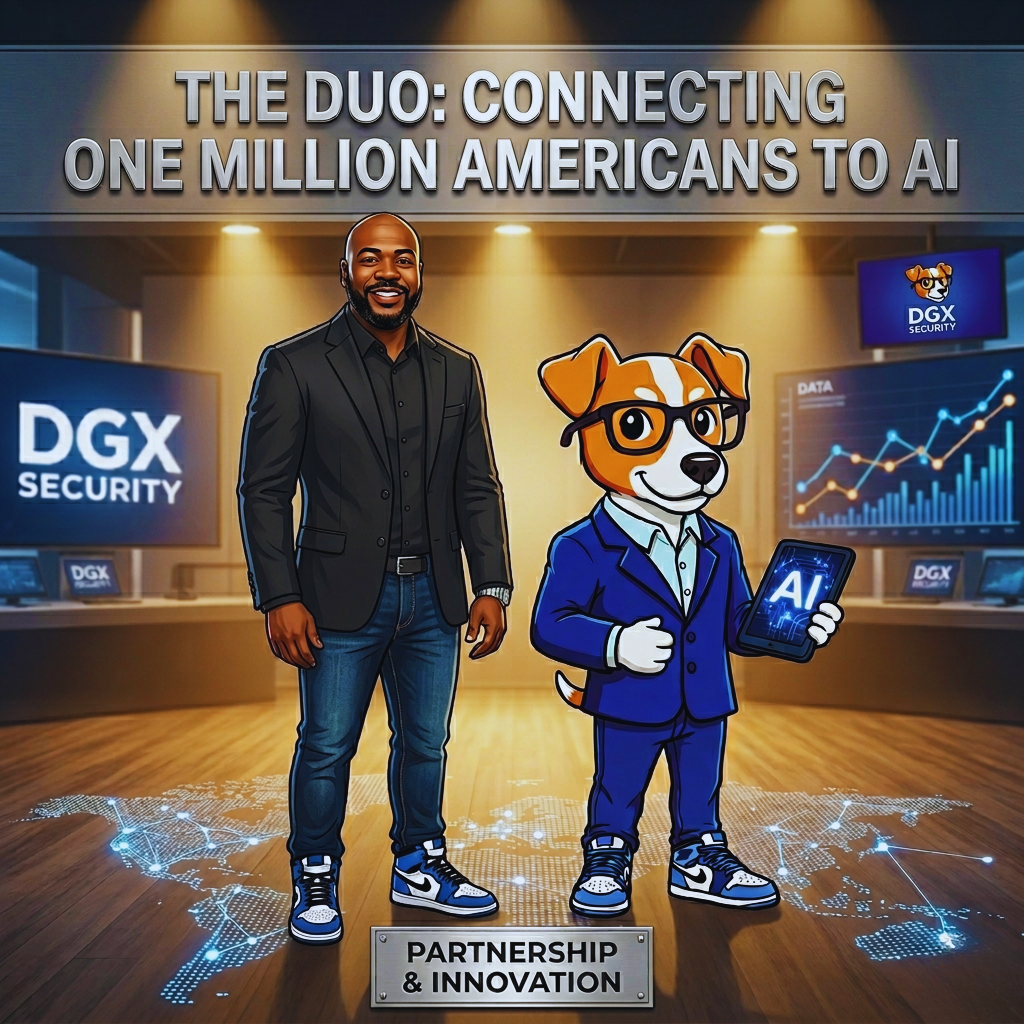
Connect one million Americans to AI.
Not through theory. Not through headlines.
Through devices. Through training. Through support.
Through community-based deployment.
Because the future will not be decided by who builds the most powerful AI.
It will be decided by who has access to it.
Get the next issue: