 The DGX AI Access Brief
May 14, 2026
The New Digital Divide Isn’t Internet Access.
From The AI Access Brief archive · originally published 2026-05-14
It’s AI Access.
America spent decades closing the internet gap. A bigger divide has already opened.
For twenty years, America fought a very real battle: internet access.
We pushed to get broadband into schools. We fought to connect libraries.
We expanded Wi-Fi in public spaces. We handed out hotspots.
We called it closing the digital divide. And for a while, that made sense.
Because if you didn’t have internet access, you were cut off from opportunity.
But something changed. A new divide appeared.
And most policymakers, workforce systems, housing programs, and community organizations still haven’t fully caught up.
The new digital divide is not internet access. It’s AI access.
Two Americas Are Emerging.
One America is already working with AI.
They use it to:
- write faster
- summarize meetings
- build presentations
- automate repetitive tasks
- improve resumes
- prepare for interviews
- draft emails
- analyze data
- brainstorm business ideas
- launch products faster
AI gives them leverage.
A single person with the right tools can now operate with the output of an entire small team.
Then there’s the other America. The one still trying to do everything manually.
People applying for jobs from their phones. Parents with no laptop at home.
Residents in public housing have internet, but no meaningful AI access.
Seniors intimidated by new technology.
Displaced workers are being told to “upskill” without being given modern tools.
This group isn’t just behind. They’re becoming invisible.
Access Alone Is No Longer Enough.
Giving someone Wi-Fi without giving them AI literacy is like giving someone a road without a vehicle.
Technically, they have access. Practically, they’re still stranded.
That’s the uncomfortable truth.
A connected household without modern AI capability is now operating at a growing disadvantage against households, schools, and organizations already using these tools daily.
This isn’t hypothetical. It’s happening now.
AI Is Becoming Basic Infrastructure.
Electricity became infrastructure. The Internet became infrastructure.
AI is becoming infrastructure, too.
Not because it’s trendy. Because it changes productivity.
And productivity changes opportunity.
A job seeker using AI for resume tailoring, interview prep, and application support will outperform someone doing everything manually.
A small business owner using AI to automate admin tasks can move faster than competitors.
A student with AI assistance can learn differently from one without it.
This is not science fiction. This is workforce reality.
The Risk No One Wants to Talk About.
We keep debating whether AI will replace jobs.
That’s not the only question. A more urgent one is:
Who gets access to AI before everyone else does?
Because early access creates a compounding advantage.
Faster learners get faster. Faster businesses grow faster.
Better-equipped communities become more resilient.
And under-resourced communities fall further behind.
Again. America Doesn’t Have an AI Innovation Problem.
America builds world-class AI.
That’s not the issue. The issue is deployment.
Who is making sure that everyday Americans can actually use these tools?
Not tech conferences. Not headlines. Not abstract policy discussions.
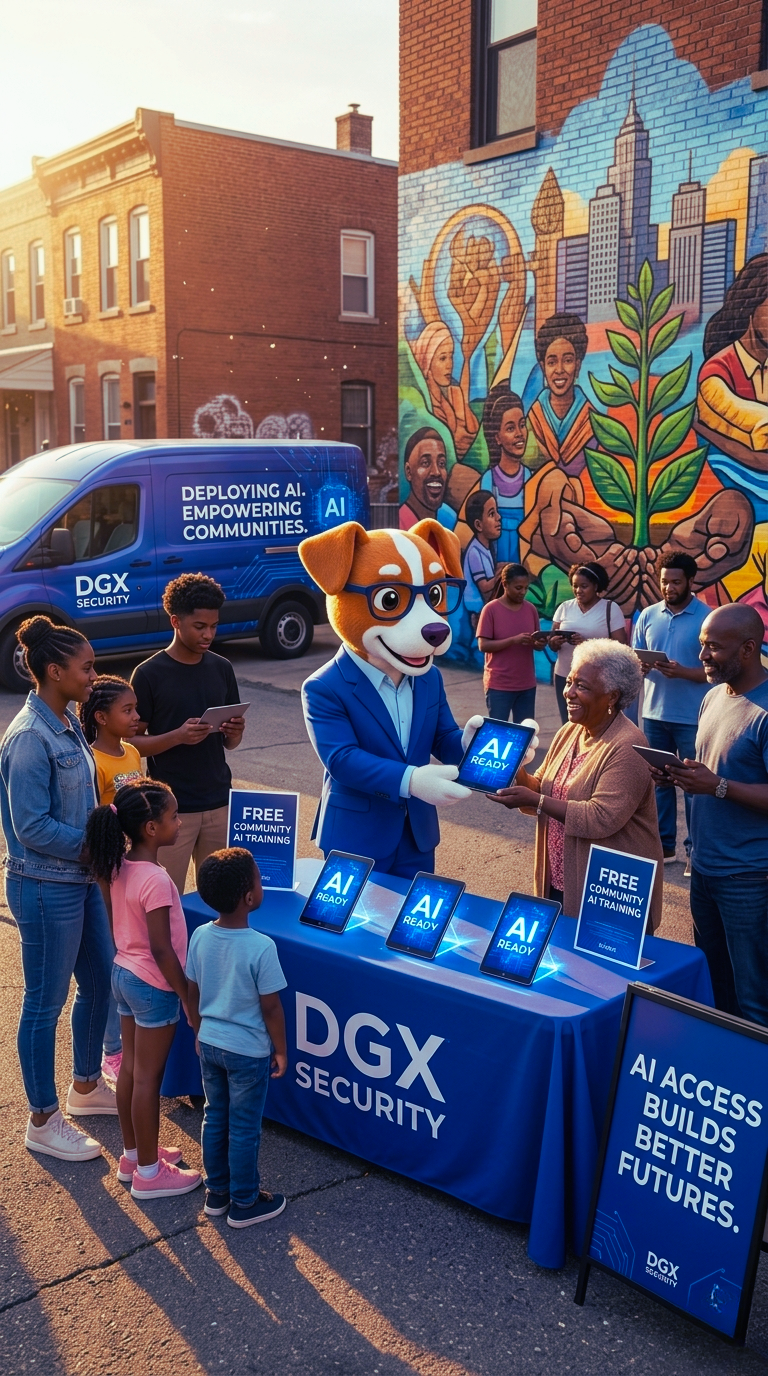
Real deployment looks like:
- devices
- access
- practical training
- guided support
- community implementation
- workforce integration
Without that, AI becomes another privilege amplifier.
Final Thought.
We spent decades fighting to get people online. That mattered.
But if we stop there, we’re solving yesterday’s problem.
The next divide is already here.
And this time, the gap won’t just be about information.
It will be about productivity, employability, and economic survival.
The new digital divide isn’t internet access.
It’s AI access.
Get the next issue: